Fibroids
Fibroids, Heavy Periods and Pressure Symptoms: Understanding Your Treatment Options
Fibroids are extremely common and affect many women during their reproductive years.
While some fibroids cause no symptoms, others can significantly affect quality of life.
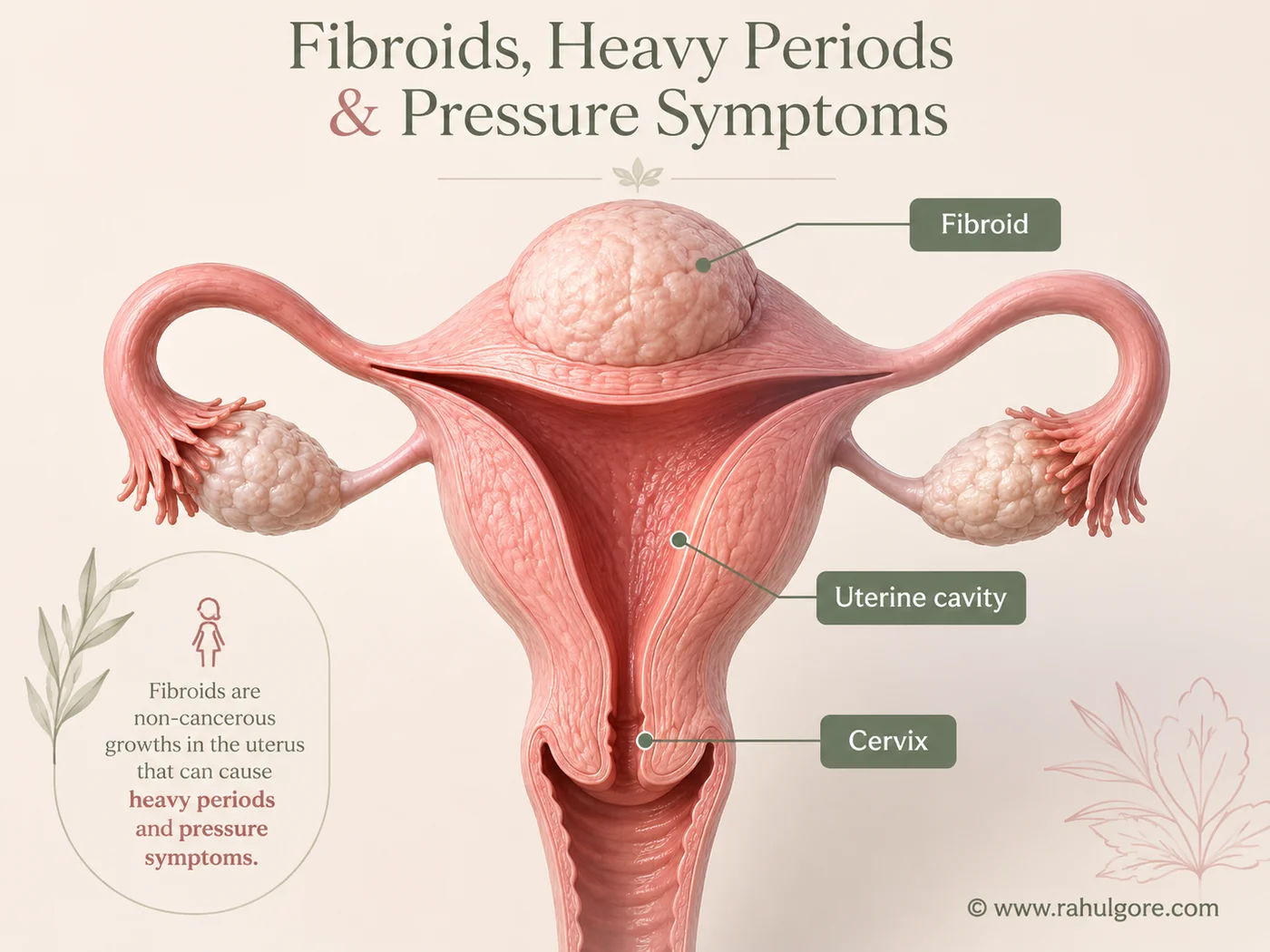 Fibroids are non-cancerous growths in the uterus that can cause heavy periods and pressure symptoms.
Common symptoms
- Heavy periods
- Anaemia
- Pelvic pressure
- Frequent urination
- Abdominal swelling
- Fertility concerns
What treatments are available?
Treatment depends on fibroid size, location, your symptoms and your fertility plans.
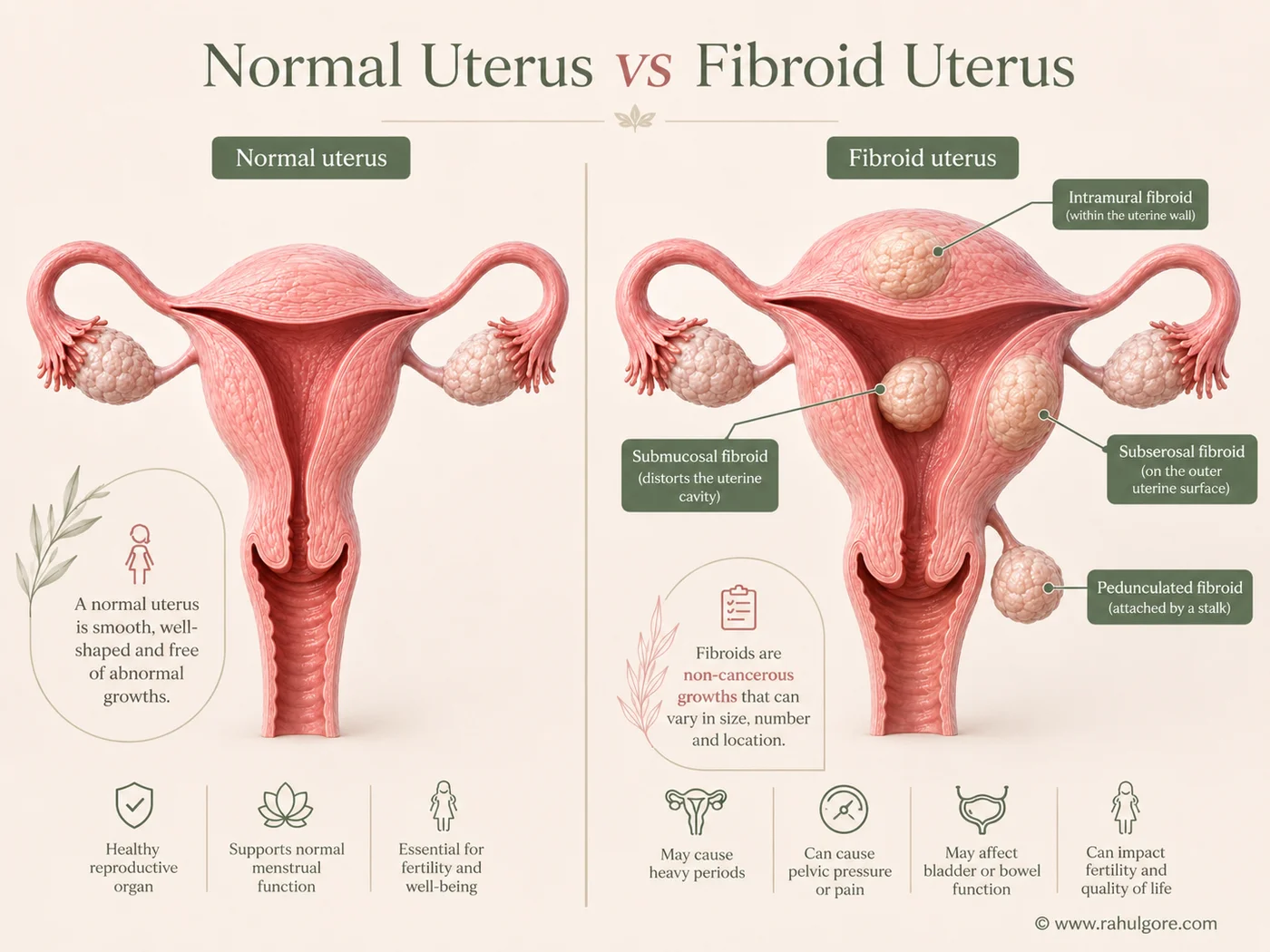 The type and position of a fibroid — intramural, submucosal, subserosal or pedunculated — influences which treatment is most suitable.
Options may include:
- Monitoring
- Medication
- Hormonal treatment
- Myomectomy
- Hysterectomy
- Uterine artery embolisation
Minimally invasive surgery
Many women are suitable for:
- Laparoscopic myomectomy
- Robotic myomectomy
- Laparoscopic hysterectomy
These approaches may offer smaller scars, faster recovery and less postoperative discomfort.
Specialist fibroid care in Kent
Mr Rahul Gore provides personalised assessment and treatment for women experiencing fibroids, heavy menstrual bleeding and fertility-related concerns.