Pelvic pain
Why Is My Pelvic Pain Not Going Away? The Hidden Causes of Chronic Pelvic Pain
Many women live with pelvic pain for years before receiving a diagnosis.
If pain is affecting your work, exercise, sleep, relationships or emotional wellbeing, it should not be dismissed as “normal.” Persistent pelvic pain deserves proper assessment.
What is chronic pelvic pain?
Chronic pelvic pain refers to pain in the lower abdomen or pelvis lasting six months or longer. The discomfort may be constant or intermittent, linked to periods or present throughout the month, and is sometimes associated with bladder or bowel symptoms.
Could it be endometriosis?
Endometriosis is one of the most common causes of chronic pelvic pain. Typical symptoms include:
- Painful periods
- Pain during intercourse
- Pain opening bowels during menstruation
- Pelvic pain between periods
- Fatigue
- Difficulty conceiving
Unfortunately, many women experience symptoms for several years before diagnosis. Our guide to the signs of endometriosis you shouldn’t ignore covers what to look out for.
Other causes of pelvic pain
Not all pelvic pain is caused by endometriosis. Other possible causes include:
Adenomyosis
A condition where tissue similar to the womb lining grows within the muscle of the uterus. Symptoms often include heavy periods, severe menstrual pain and pelvic pressure.
Ovarian cysts
Some ovarian cysts can cause pelvic discomfort, bloating, pain during exercise, or sudden pain if rupture or torsion occurs. If a cyst has been found on a scan, read what happens next after an ovarian cyst is found.
Fibroids
Fibroids may cause pelvic pressure, heavy periods, lower abdominal discomfort and bladder symptoms. Our guide to fibroid treatment options explains how they are managed.
Pelvic adhesions
Previous surgery, infection or endometriosis may lead to scar tissue that can contribute to pain.
Bladder and bowel conditions
Sometimes symptoms overlap with irritable bowel syndrome (IBS), interstitial cystitis or bladder pain syndrome. This is why comprehensive specialist assessment is important.
How is pelvic pain investigated?
Depending on symptoms, assessment may include:
- A detailed clinical history
- Pelvic examination
- Specialist ultrasound scan
- MRI scan
- Diagnostic laparoscopy in selected cases
The goal is to identify the underlying cause and create an individualised treatment plan.
Treatment options
Treatment depends on the diagnosis and your goals. Options may include lifestyle modifications, hormonal treatment, pain-management strategies, specialist endometriosis surgery, laparoscopic surgery or robotic-assisted surgery. Many women benefit from a combination of treatments rather than a single approach.
When should you seek specialist advice?
Consider seeking specialist assessment if you experience:
- Severe period pain
- Pelvic pain lasting longer than six months
- Pain affecting work or family life
- Pain during intercourse
- Fertility concerns
- Symptoms not improving despite treatment
Early assessment may help avoid prolonged suffering and unnecessary delays in diagnosis.
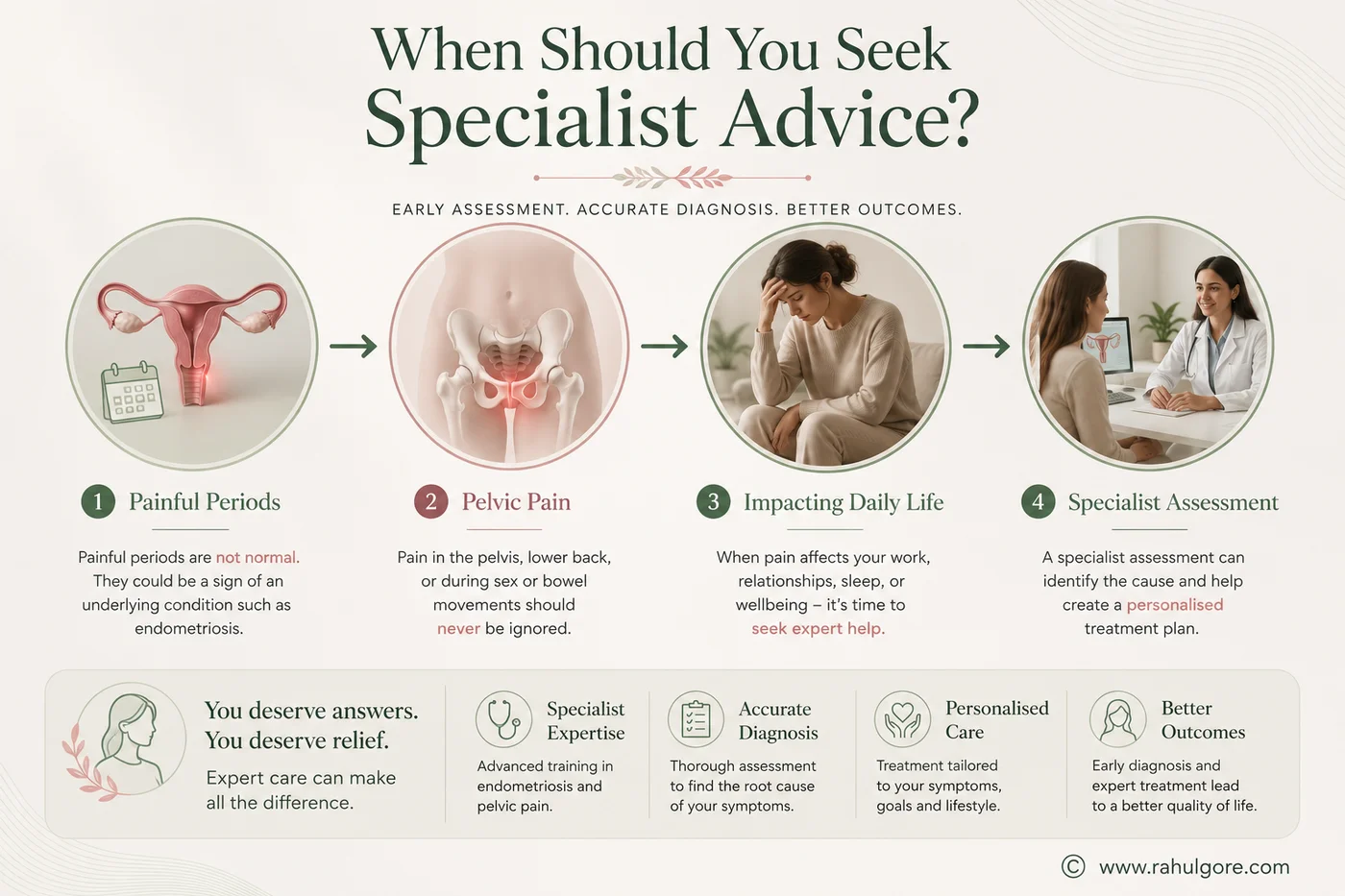 If pain is affecting your work, relationships or wellbeing, a specialist assessment can identify the cause and lead to a personalised treatment plan.
Specialist pelvic pain care in Kent
Mr Rahul Gore is a consultant gynaecologist with specialist expertise in chronic pelvic pain, endometriosis, advanced laparoscopic surgery and robotic gynaecological surgery. His focus is on identifying the cause of symptoms, providing clear explanations and developing personalised treatment plans. A second opinion is also available.